
Explore Tech Trends GFXProjectality in 2026 — from AI-powered design and real-time rendering to AR/VR immersive experiences and cloud collaboration. A fully optimized, expert guide for designers, developers, and digital professionals.
Technology doesn’t slow down for anyone. Every few years, a concept quietly emerges that reorganizes how entire industries approach digital creation — and in 2026, that concept is GFXProjectality. If you work in design, development, marketing, or digital media and you haven’t come across this term yet, you’re about to understand why it matters more than most trend reports suggest.
This article breaks down exactly what Tech Trends GFXProjectality means, why it’s gaining traction across industries, and how professionals can start applying its principles today. No buzzword padding. Just real information, backed by what’s actually happening in live creative and technical environments right now.
Quick Facts: Tech Trends GFXProjectality at a Glance
| Detail | Information |
|---|---|
| Full Term | Tech Trends GFXProjectality |
| Core Concept | Convergence of AI design, real-time rendering, AR/VR/XR, and cloud-based project workflows |
| Year of Mainstream Recognition | 2025–2026 |
| Key Industries Affected | Design, Gaming, Marketing, Healthcare, Education, Architecture, HR |
| Primary Tools Referenced | Midjourney, Figma AI, Unreal Engine 5, Adobe Firefly, Canva AI |
| Global AR/VR Market Projection | $250 billion by 2026 (Deloitte) |
| Creative Tech Market Projection | Exceeding $500 billion within the next decade |
| AI Efficiency Agreement (Designers) | 78% say AI boosts efficiency (Figma 2026 Report) |
| Key Technology Drivers | Generative AI, Extended Reality (XR), Real-Time Rendering, Cloud Collaboration |
| Origin of GFX Component | Advanced graphics processing and real-time visual computation |
Understanding GFXProjectality: More Than Just a Buzzword
Let’s start with what the term actually means, because most articles skip this part or get it wrong.
GFXProjectality refers to the intersection of graphic design technology (GFX) and project management practices, focusing on how modern tools, workflows, and tech trends shape creative project execution. It encompasses everything from AI-powered design software to collaborative platforms that help creative teams deliver better work faster.

A more precise way to put it: Tech Trends GFXProjectality describes the convergence of AI-driven design tools, real-time rendering, and immersive AR/VR experiences into a single, connected production workflow. It’s not one tool or one platform — it’s the framework behind how modern creators, developers, and business teams are building visual content that responds, adapts, and engages in ways static media never could.
Think of it less as a product and more as a production philosophy — one that asks a single, practical question: what technologies are actually delivering results in real projects, right now?
The term gained traction in 2026 reports. Stanford’s AI Index notes 90% of AI models originate from industry, fueling these trends. The concept itself is not speculative. It reflects what creative and technical teams are already doing at scale, often without knowing there’s a framework to describe it.
Why GFXProjectality Matters Right Now
Creative work has shifted fundamentally over the past five years, and the pace of that change is accelerating.
A designer working solo in 2019 might have used Adobe Creative Suite, email, and maybe Dropbox. That same designer in 2024 likely uses cloud-based design tools, AI assistants, project management platforms, real-time collaboration software, and automated backup systems. The change isn’t just about more tools — it’s about fundamentally different ways of working.
Remote teams became the norm. Clients now expect faster turnarounds. Design complexity increased while budgets often didn’t. The professionals who understand which technologies genuinely solve these problems — rather than just adding noise — are the ones pulling ahead.
According to recent industry reports, more than 70% of companies worldwide are accelerating digital transformation initiatives. Businesses now invest heavily in automation, cloud platforms, and AI-powered systems. Consumers expect engaging and personalized digital experiences. The global creative tech market — including gaming, animation, and digital design — is projected to exceed $500 billion within the next decade.
These aren’t hypothetical projections. They are the market conditions that make understanding GFXProjectality practically useful, not just intellectually interesting.
AI-Powered Design: The Engine Driving GFXProjectality
Of all the forces reshaping the GFXProjectality landscape, artificial intelligence is the most immediately impactful for working designers and agencies.
Tools like Adobe Firefly, Midjourney, and Canva’s AI features now handle tasks that used to take hours. Background removal happens in seconds. Color palette generation adapts to brand guidelines automatically. Layout suggestions appear based on content type.
The real-world impact is significant. A small marketing agency in Chicago reduced their social media asset creation time by 60% using AI-assisted templates and automated resizing. Their three-person team now produces content that previously required six people.
The key insight here — and one that separates informed adoption from hype-chasing — is that AI works best as a collaborator, not a replacement. The key isn’t replacing designers. It’s removing repetitive tasks so designers focus on creative strategy and refinement.
Figma’s 2026 report shows 78% of designers agree AI boosts efficiency. Yet only 32% trust outputs fully. That gap is not a problem — it’s healthy. Human oversight remains the standard. The best workflows in 2026 use AI to generate, iterate, and test rapidly, then apply skilled human judgment to refine and finalize.
In GFXProjectality, AI tools help generate 3D models, textures, and animations automatically, suggest design variations based on audience behavior, and optimize workflows by predicting the most effective visual elements.
Real-Time Rendering: Changing How Creators See Their Work
If AI is the brain of GFXProjectality, real-time rendering is its nervous system — the technology that makes complex creative decisions visible instantly rather than after hours of processing.
Unlike traditional rules that require long processing times, real-time structures create views right away after modification. This efficiency is changing the way companies do their work. Instead of hours waiting for the final version, creators can instantly see effects, adjust layouts on the fly, and iterate far faster.
The industry benchmark for this capability in 2026 is Unreal Engine 5. Unreal Engine 5’s Nanite and Lumen systems are the current industry benchmark for this capability. According to its developer Epic Games (2025 documentation), Nanite handles micro-polygon geometry at film-quality resolution in interactive framerates previously impossible outside pre-rendered film pipelines.
What this means practically: architecture firms can walk clients through photorealistic building renders before a foundation is laid. Film studios can adjust lighting conditions in real time during pre-visualization. Game developers can test complete world environments without waiting for overnight render queues.
This trend reduces production time, lowers costs, and allows for more ambitious creative projects. For smaller studios and freelancers who historically couldn’t afford the hardware to compete with major production houses, cloud-based rendering has become the equalizer — making professional-quality visual output accessible without a six-figure infrastructure investment.
Extended Reality (AR, VR, XR): The Immersive Output Layer
Extended reality — the umbrella term covering augmented reality, virtual reality, and mixed reality — is where GFXProjectality’s outputs become experiences rather than images.
Most people think XR requires a headset. It doesn’t anymore — not for most business applications. AR overlays digital elements on the real world (your phone camera is already capable). VR immerses users in fully virtual environments. In GFXProjectality, these aren’t standalone technologies — they’re output formats for the AI and real-time rendering pipeline.
The market data underlines the scale of this shift. According to Deloitte’s 2026 media and entertainment outlook, the global AR/VR market is projected to reach $250 billion by 2026, driven precisely by real-time and immersive platform adoption.
Applications span every major industry. In education, students can explore interactive simulations of anatomy, physics, or history. In healthcare, doctors can practice surgeries or analyze 3D models of patient anatomy. In entertainment, gamers experience fully immersive worlds with responsive interactions. In marketing, AR try-ons, virtual showrooms, and interactive ads engage customers effectively.
For HR professionals, the implications are equally real. VR enables virtual onboarding as a result of the remote work rise, creating more inclusive training. Forbes predicts VR transforms offices. AI analyzes employee data for personalized development paths.
The businesses that treat XR as a distant future technology are already behind the organizations that have made it a present-day workflow tool.
Cloud Collaboration: The Infrastructure That Makes It All Work
None of the above — not AI design, not real-time rendering, not immersive XR — delivers consistent value without a stable, scalable infrastructure for teams to collaborate through. That’s where cloud platforms become the connective tissue of the GFXProjectality framework.
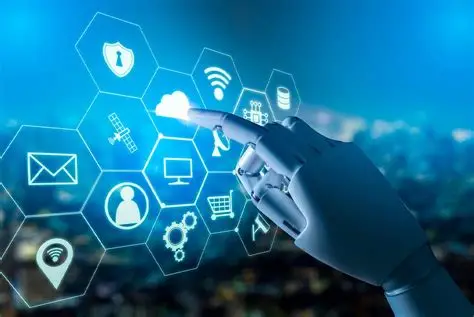
Cloud platforms allow teams to collaborate in real time across multiple locations. Multiple users can access, edit, and share assets seamlessly. This ensures that large projects maintain consistency, efficiency, and scalability.
Visual projects are computationally heavy. Real-time rendering, AI processing, and large-scale simulations require powerful hardware. Cloud computing allows heavy workloads to run on remote servers, making high-end visual production accessible to smaller teams.
For distributed creative teams — a reality for most agencies post-2020 — cloud infrastructure isn’t an upgrade. It’s a baseline requirement. The GFXProjectality framework specifically elevates cloud collaboration as a core pillar because without it, the other technologies become siloed rather than synergistic.
Challenges You’ll Actually Face Adopting GFXProjectality
No honest guide about technology adoption skips the friction. Here’s what teams genuinely encounter when integrating GFXProjectality principles into real workflows.
Cost as a barrier. High-end tools and hardware still carry significant price tags. The practical solution: start with cloud-based tools, which dramatically lower entry costs compared to local infrastructure investments.
Skill gaps. New tools require new competencies. Many teams find that the technology outpaces their training. Online courses, vendor tutorials, and phased adoption — starting with one tool before adding the next — make this manageable.
Data privacy risks. AI-powered design tools and cloud platforms collect and process significant amounts of data. Integrated systems collect more information, creating potential breach risks. Mitigation requires encryption and compliant platforms. Teams should audit their tool stack for data handling practices before scaling adoption.
Human trust in AI outputs. As noted earlier, only 32% of designers fully trust AI-generated outputs. Building internal review processes that apply human judgment at key stages keeps quality high without eliminating the efficiency benefits.
How to Start Applying GFXProjectality in Your Workflow
The best way to understand GFXProjectality isn’t to read about it — it’s to experience it in a real project. Here’s a practical entry sequence:
Start with AI-assisted design in a tool you already use. Figma’s AI plugins and Canva’s Magic Studio both offer free-tier access. Run a current project brief through AI generation and note where it saves time versus where human refinement is still essential.
Add real-time rendering to one project. Unreal Engine 5 is free to download, and Epic Games offers accessible getting-started tutorials. Even completing the basics will shift how you think about the relationship between design iteration and visual feedback.
Explore one XR application relevant to your industry — whether that’s an AR product preview for a client, a VR onboarding module, or an interactive training simulation. The goal isn’t perfection on the first attempt; it’s developing firsthand understanding of what the technology can and cannot do.
Three technologies — generative AI design, extended reality XR, and real-time rendering — are driving the biggest transformation the design industry has ever seen. Professionals who understand these shifts, invest in relevant skills, and apply them thoughtfully will dominate the next decade of creative work.
Final Thoughts: GFXProjectality Is Already Here
The most important thing to understand about Tech Trends GFXProjectality in 2026 is that it isn’t something to prepare for. It’s something that’s already shaping how leading creative and technical teams operate every day.
GFXProjectality isn’t a future trend you’re preparing for. For these industries, it’s the current production standard. The question is whether your workflow reflects that yet.
For designers, developers, marketers, and business leaders who want to stay relevant as the digital landscape shifts, the answer isn’t to chase every new tool that launches. It’s to understand the framework those tools operate within — and GFXProjectality gives you exactly that. A clear lens for evaluating what matters, what works, and what will genuinely move your projects forward.